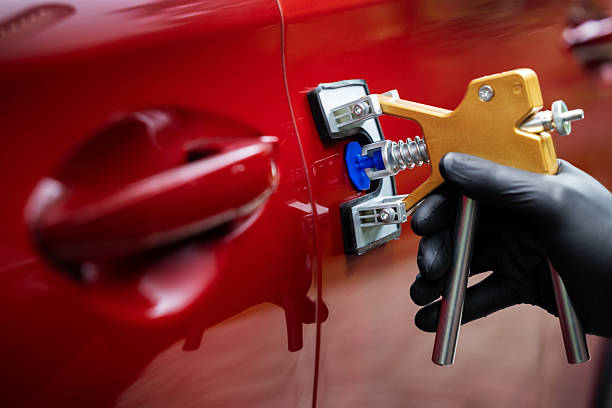
Hail can turn a calm drive into hours of worry. Pebble-sized ice strikes at up to 72 miles per hour, leaving dents, chipped trim, and rattled nerves. Still, for every scarred roof you’ll hear a dozen theories—many are loud thunder with no rain. Friends say the dents will pop out in summer heat. A neighbor warns that filing a claim will double your premium. Someone online swears a suction cup does the same job as a technician’s rods and lamps. When myths outnumber facts, owners either overspend or do nothing and let rust creep in. Let’s set things straight. Here are ten popular tales about hail-damage repair and the clear, tested truths that shut them down. Read on, and drive with confidence after the next storm.
Myth 1: Purely Cosmetic Damage
Dents may look like harmless dimples, yet even shallow ones change how steel or aluminum panels disperse stress. Think of a soda can: one small crease and the whole wall buckles with light pressure. Car panels act the same way. A 2024 Insurance Institute for Highway Safety study found that panels weakened by hail were 18 percent more likely to fail side-impact tests. Paint fractures can also let moisture reach the metal, starting rust within months. That corrosion eats outward and turns a paintless repair into a full panel replacement. Skipping repair to “save money” often costs more in resale, too; dealerships use paint-depth gauges that flag any hail dent larger than 10 millimeters. So the myth that damage is merely cosmetic ignores hidden safety and value risks.
Myth 2: Sunlight Pops Dents Out
Warm sunlight may soften paint, but metal memory is limited. Automotive panels are shaped by huge hydraulic presses that stamp curves at tons of pressure. A mild spring day cannot reverse that force. Studies by the Society of Automotive Engineers show that after the first ten minutes, metal stretched from hail becomes permanent. Temperature changes move paint and clear coat more than the panel beneath, often worsening the crease as layers expand at different rates. Owners who “wait for summer” usually return with sharper edges and a cracked clear coat. Paintless dent repair (PDR) works for many because technicians massage the underside at precise points, restoring tension along the whole crease, not just pushing the low spot. Waiting for a magical pop-back is wishful thinking that can double the eventual repair bill.
Myth 3: Panels Must Be Replaced
Decades ago, body shops often quoted panel replacement because filler technology was crude and paint matching unreliable. Today, high-strength steel and aluminum can be reshaped without removing factory paint if dents are free of sharp tears. Technicians use:
Carbon-fiber rods
Adjustable LED light boards
Digital depth gauges precisely measure deflection to 0.01 millimeter.
As long as paint remains intact, PDR restores the panel at a fraction of the cost and keeps the original corrosion coating untouched. Insurance carriers favor this approach: the 2023 CCC Intelligent Solutions report notes that 65 percent of hail claims were settled using PDR alone, saving an average of $850 per vehicle. Panel swaps are now a last resort, reserved for creases near edges or where paint has chipped through to bare metal.
Myth 4: Insurance Rejects PDR Claims
Comprehensive coverage exists exactly for events like hail. Most policies list “wind-driven objects” as a covered peril, and adjusters accept PDR as an industry standard. In fact, insurers often push for PDR because it is cheaper and keeps repair times low. State Farm’s 2022 claim data showed average hail payouts of $4,347 when panels were replaced but only $2,915 when PDR was used, yet customer satisfaction scores remained equal. Because of those savings, many carriers waive the second inspection if the shop is I-CAR Gold Class or uses photo-based estimating tools. Remember that claims fall under comprehensive, not collision, filing usually does not raise premiums unless you have several weather claims. Call your agent, provide photos, and ask whether a mobile adjuster can approve a paintless plan on site.
Myth 5: DIY Kits Match Pros
Glue pullers and suction cups sold online can remove shallow lows, but they lack the feedback a trained hand gains through metal rods and reflector boards. Professionals read the distorted light pattern to judge where tension must relax across the entire surface. Pull too hard on a glue tab and you create a high spot called a “crown,” which then needs to be tapped down with a polished hammer. That hammering breaks the cheap aftermarket clear coat more than the factory paint. A test by Dent Industry News placed ten hobbyists against one master tech; the hobby group averaged 63 minutes per dent and left 0.4-millimeter highs, while the technician averaged 11 minutes with no measurable distortion. DIY kits have their place for soft drink cans, not multi-layer automotive panels at home.
Myth 6: PDR Cracks Your Paint
Modern automotive paint is flexible. The clear-coat layer can stretch up to 25 percent before fracturing, according to BASF laboratory data. PDR tools apply slow, controlled pressure from behind the panel, allowing paint to flex rather than snap. Techs also warm the area to about 140°F with induction pads, which lowers the paint’s modulus and adds a safety margin. The real threat comes from sharp prying or cold hammer strikes—methods avoided by certified shops. Manufacturers recognize PDR safety; Ford’s 2021 repair manual for the F-150 explicitly states that paintless techniques “shall be used when feasible to keep corrosion coatings intact.” Field experience supports this: industry warranty records show that less than 0.1 percent of PDR repairs reported paint cracking within two years. If done right, the original paint stays flawless and strong.
Myth 7: Large Dents Stay Forever
Size matters less than location and depth. An experienced technician can move metal the length of a forearm as long as the impact did not crease a body line or stretch beyond 3 percent of the original shape. Large dents are tackled in stages: first using glue tabs to lift the center, then rods to feather the edges, and finally, blending hammers to level high spots. Thermal cameras track progress, revealing hidden tension rings. In 2024, the Vale Training Center certified repairs on dents measuring 5 inches wide and ½-inch deep on aluminum hoods and panels once thought unfixable. Expect more time and cost for such work, yet it is still cheaper than repainting. The myth survives because people see only the starting crater, not the steps that make big dents shrink away.
Myth 8: Repairs Take Weeks
Hail storms tend to hit entire neighborhoods, so backlogs happen, yet the repair time per vehicle is short. A typical roof with 50-70 quarter-size dents needs around six hours of hands-on work. Shops build temporary tents and add night shifts to clear queues. During the 2023 Texas hail season, data from the National Auto Body Council showed an average key-to-key time of 4.2 days for PDR shops, compared with 11.5 days for traditional filler and paint. Many facilities offer same-day service on light damage, especially if panels can be removed for bench work while you drive a loaner car. Ask whether the shop uses mobile estimating apps; quicker approvals cut waiting lines. Weeks of downtime are now rare unless a claim includes glass, trim, or back-ordered roof moldings for parts.
Myth 9: Fixing Hurts Resale Value
Dealers and buyers favor honest repairs over visible damage. Paintless work preserves factory finish, which car-history services consider original. CARFAX notes repair events, yet lists PDR under “minor cosmetic,” which is the same category as door-handle scratches. A 2022 Manheim auction study found that vehicles with documented PDR sold for only $57 less on average than undamaged models, while cars still showing hail dents fetched $1,125 less. The reason is simple: buyers picture hidden costs when they see dents, but trust certified invoices and lifetime warranties. Keep your receipts and ask the shop for pre- and post-repair photos; digital photo logs boost trade-in offers. Rather than dragging value down, professional hail repair keeps your car within market range and helps you negotiate confidently. Some lenders often withhold gap coverage on cars left unrepaired.
Myth 10: You Can Always Wait
Time is metal’s enemy. Every dent creates a tiny shelf where water pools. Road salt and airborne acids sit longer in these pockets and begin a galvanic reaction. Engineers at the University of Michigan measured corrosion at dent centers to advance three times faster than on flat paint. Left unchecked, rust creeps under clear coat, lifting it like a blister; sanding and repainting become the only cure. Insurers also set deadlines: most carriers require hail claims within 12-24 months of the storm date. Miss that window, and you pay out of pocket. Finally, busy repair seasons follow weather cycles; waiting until spring means competing with thousands of claims. Schedule an assessment soon after the storm, store photos with the date stamp, and secure your spot before the shop queue fills to avoid costly delays.